East Texas homes have the perfect combination of humidity, mild winters, and mature tree cover that pests love. If you live in Palestine, Frankston, Elkhart, Grapeland, or anywhere else in Anderson County, chances are you’ve dealt with — or will deal with — some kind of household pest sooner or later. The tricky part is that most infestations don’t announce themselves. By the time you actually see a roach scurry across your kitchen floor or spot a mouse in the pantry, the problem is usually already bigger than it looks.
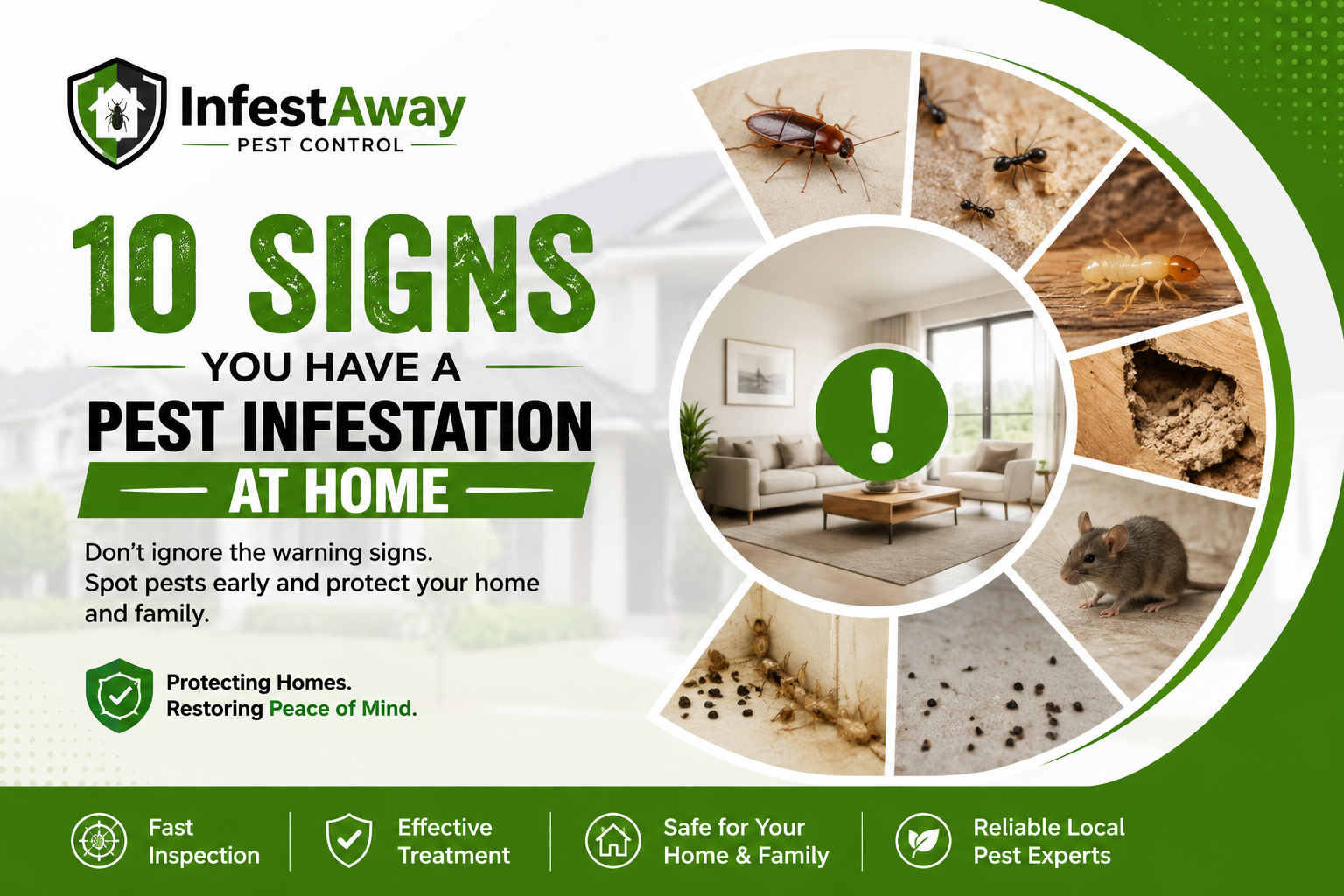
Knowing the early warning signs of pests can save you money, protect your home’s structure, and keep your family healthier. Below are the 10 most reliable signs of a pest infestation, what they usually mean, and when it’s time to call a professional pest control company.
1. Droppings in Cabinets, Drawers, or Along Baseboards
Droppings are one of the clearest and most common signs of an infestation. Rodent droppings are small, dark, and pellet-shaped, often clustered near food sources, under sinks, or along walls where rodents travel. Roach droppings look more like ground coffee or black pepper and tend to collect in corners, behind appliances, and inside cabinets.
If you’re finding unexplained debris in your kitchen or pantry, don’t just clean it up and move on — it’s worth investigating further, because droppings almost always mean there are more pests hiding than you can see.
2. Gnaw Marks on Wood, Wires, or Food Packaging
Rodents like mice and rats have teeth that never stop growing, so they chew constantly to keep them filed down. This means gnaw marks on baseboards, cabinet corners, cardboard boxes, or even electrical wiring are a strong red flag. Chewed wiring is especially concerning because it’s a fire hazard, not just an inconvenience.
If you notice torn cereal boxes, chewed plastic containers, or small holes in food packaging, treat it as a sign that rodents have already found a reliable food source in your home.
3. Strange Noises in the Walls or Attic
Scratching, scurrying, or tapping sounds coming from your walls, ceiling, or attic — especially at night — are a classic sign of rodents or, in some cases, squirrels that have found their way into your home’s structure. Palestine’s older homes and homes near wooded lots are particularly prone to this, since gaps around rooflines and soffits give animals easy entry points.
If the noise seems to move or you hear it consistently around the same time each night, it’s worth having a professional inspect your attic, eaves, and crawl space.
4. Unusual Odors
Pests often leave behind distinct smells that are easy to overlook until they build up. A musty, oily odor can indicate a large cockroach population, while a strong ammonia-like smell is often linked to rodent urine concentrated in one area, like an attic or wall void. Termite infestations can sometimes produce a faint moldy or damp-wood smell as they damage structural wood from the inside out.
If a room smells “off” and you can’t pinpoint why, don’t ignore it — odors are often one of the earliest signs of an infestation that hasn’t become visible yet.
5. Damaged or Hollow-Sounding Wood
Termites are one of the most damaging pests homeowners in Texas deal with, largely because their damage happens out of sight. Wood that sounds hollow when tapped, sags unexpectedly, or crumbles more easily than it should can point to termite activity. You might also notice small holes, blistered paint, or wood that looks slightly warped.
Because termite damage progresses quietly and can compromise a home’s structural integrity over time, this is one sign that almost always warrants a professional termite inspection rather than a wait-and-see approach.
6. Mud Tubes Near the Foundation
Speaking of termites, subterranean termites — the most common species in East Texas — build pencil-thin mud tubes along foundations, exterior walls, or crawl space piers to travel between the soil and their food source (your home’s wood) while staying protected from open air. If you spot these narrow, dirt-colored tubes running vertically along your foundation, it’s a near-certain sign of termite activity and calls for immediate attention.
7. Nests or Nesting Materials
Rodents build nests out of shredded paper, fabric, insulation, or dried plant material, usually tucked into quiet, undisturbed areas like attics, wall voids, behind appliances, or inside storage boxes. Finding a nest — even an old, abandoned one — is a sign that pests have not only entered your home but have been comfortable enough to settle in.
Wasps and other stinging insects also build visible nests under eaves, in sheds, or in tree branches around the yard, which is especially common during the warmer months in Anderson County.
8. Grease Marks or Smudges Along Walls
Rodents tend to travel the same paths repeatedly, and the natural oils in their fur leave behind dark, greasy smudge marks along baseboards, walls, and entry points over time. These marks are subtle but telling — if you notice a dark smear low on a wall near a corner or gap, it’s likely a rodent runway.
9. Visible Pests, Even Just One or Two
It’s tempting to assume that seeing a single bug or rodent is a fluke, especially if your home is otherwise clean. In reality, most pests are far better at hiding than at being seen, which means spotting even one cockroach, mouse, or ant trail during the day (when many pests are normally nocturnal) usually signals a larger population nearby.
This is especially true for cockroaches. Seeing them during daylight hours often means the hidden population has grown large enough that some individuals are being pushed out to forage.
10. Damaged Insulation or Unexplained Allergy Flare-Ups
Shredded, flattened, or displaced insulation in the attic is a common sign of rodent nesting activity, since they burrow into it for warmth. Separately, if family members start experiencing unexplained allergy symptoms, asthma flare-ups, or skin irritation, it could be linked to dust mites, cockroach droppings, or rodent dander — all of which are known allergy and asthma triggers that build up gradually as an infestation grows.
Why Pest Infestations Are So Common Around Palestine, TX
Anderson County’s mix of wooded lots, humid summers, and mild winters creates ideal conditions for pests year-round. Homes near the Davy Crockett National Forest or along rural properties in Frankston, Slocum, or Elkhart are especially prone to rodent and termite activity due to nearby wood, moisture, and natural cover. Even homes within Palestine’s city limits aren’t immune — older housing stock, mature trees, and proximity to creeks and drainage areas all create easy access points for common regional pests, including:
- German and American cockroaches
- Subterranean termites
- House mice and roof rats
- Fire ants
- Wasps and hornets
- Spiders, including brown recluse
What to Do If You Notice These Signs
If you’ve spotted one or more of these warning signs in your home, the most important thing is not to wait. Pest populations grow quickly, and problems like termite damage or rodent-chewed wiring can turn into expensive repairs the longer they go unaddressed. A professional inspection can identify exactly what you’re dealing with, how widespread it is, and the safest, most effective treatment plan for your specific situation.
Infestaway Pest Control proudly serves Palestine, TX and the surrounding communities, including Frankston, Elkhart, Grapeland, Slocum, and Neches. Our local technicians know the specific pest pressures East Texas homes face and provide thorough inspections, targeted treatments, and ongoing prevention plans to keep your home protected year-round.
Frequently Asked Questions:
How quickly can a pest infestation get out of control?
No. DIY treatments typically only kill visible pests and don’t reach hidden nests, termite colonies, or large-scale infestations, so a professional inspection is recommended for serious problems.
Can I treat a pest infestation myself?
Cost varies by pest type and property size, but most treatments range from $150–$500 depending on severity and whether it’s a one-time visit or an ongoing plan.
How often should I have my home inspected for pests in Palestine, TX?
Not always. Store-bought pesticides can pose risks if misapplied, while professional technicians apply treatments according to safety guidelines that account for pets and children in the home.
Are the pests in East Texas different from other parts of the state?
Yes. Many homeowners use DIY prevention, like sealing cracks and removing food sources, alongside professional treatment for existing infestations for the best long-term results.
Noticing any of these signs in your home? Contact Infestaway Pest Control today for a professional inspection and a customized treatment plan built for Palestine, TX homes.
Call Now or Book Online – Don’t wait until pests take over. Get your FREE inspection today!