If you’ve found bites, blood spots on your sheets, or tiny reddish-brown bugs near your mattress seams, you’re probably searching for a bed bug exterminator near me right now. Here’s the short answer: a professional bed bug exterminator inspects your home to confirm and map the infestation, then applies a targeted treatment — usually heat, chemical, or a combination of both — followed by a return visit to confirm the bugs are gone. The full process typically takes one to three visits over 2–4 weeks.
Below, we walk through exactly what happens at each stage, so you know what to expect when you call InfestAway Pest Control for bed bug treatment in Palestine, TX and the surrounding area.
Why Bed Bugs Are a Professional-Only Problem
Bed bugs aren’t a niche issue — more than 8 in 10 U.S. pest control professionals treated an active bed bug infestation in the past year, according to a 2025 survey by the National Pest Management Association and the University of Florida.¹ That scale exists because bed bugs are exceptionally good at hiding and exceptionally bad candidates for DIY control.
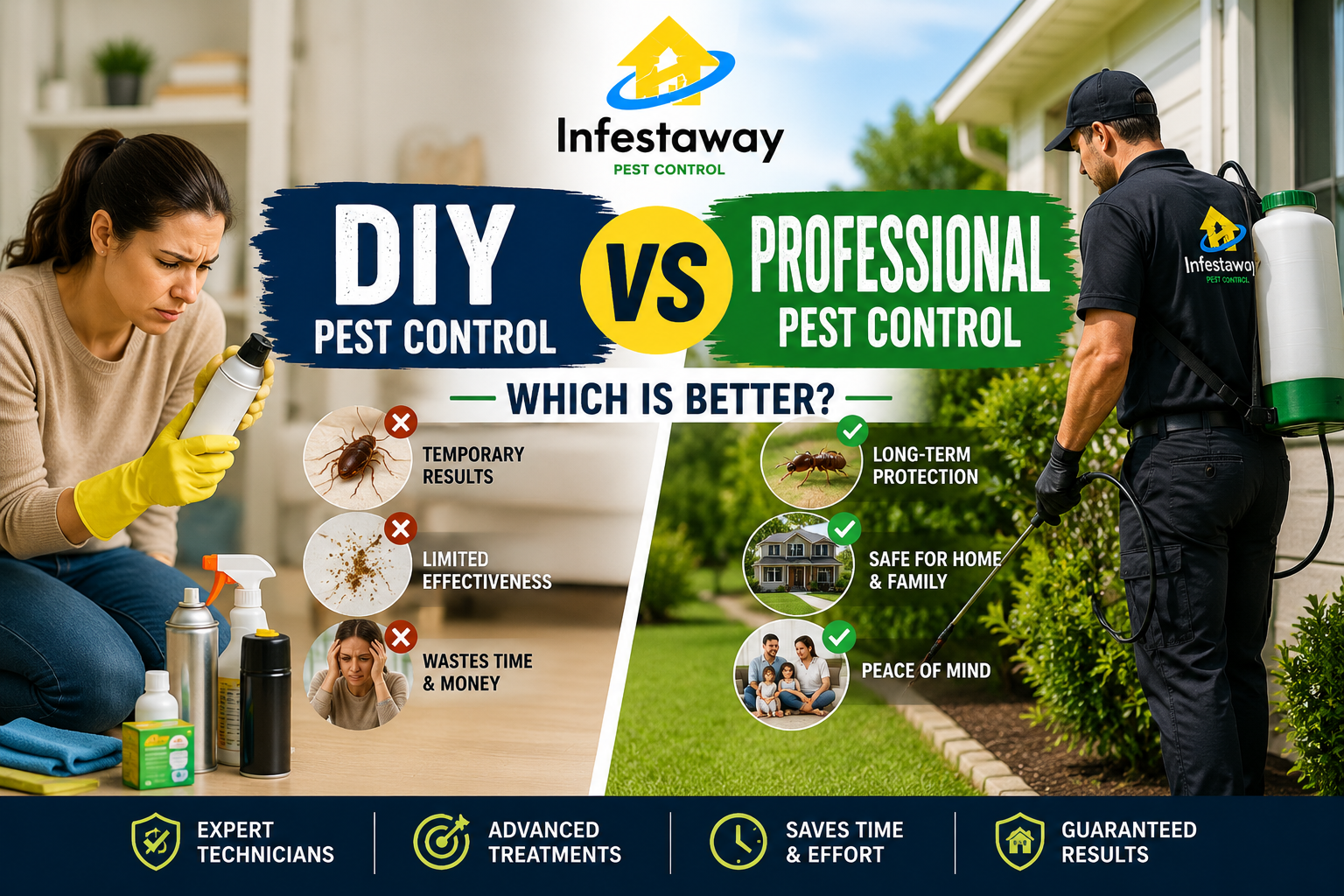
Store-bought sprays and foggers only kill the bugs they directly touch. Bed bugs hide deep in mattress seams, baseboards, outlets, and furniture joints — and according to the EPA, they will readily travel 5 to 20 feet from a hiding spot to reach a host, then return to a different crack or crevice afterward.² That means a fogger limited to one room can miss an infestation that’s already spread to the wall behind your headboard or the outlet across the room. Any bugs that survive simply relocate and keep breeding, which is the single biggest reason DIY treatments fail and infestations come back larger than before.
A licensed Bed Bug Exterminator in Palesatine uses tools and products that aren’t available to consumers — including professional-grade heat equipment, residual insecticides labeled specifically for bed bugs, and inspection techniques (like checking seams with a flashlight and credit card, or using interceptor traps) that catch evidence most homeowners miss entirely.
How Bed Bugs Spread Through a Home
Understanding how bed bugs move helps explain why a single-room treatment often isn’t enough:
- They’re expert hitchhikers, riding in on luggage, used furniture, and clothing.
- Once inside, they crawl at roughly 3–4 feet per minute on smooth surfaces — fast enough to travel between rooms overnight.
- In apartments and multi-room homes, they can move through wall voids and electrical outlets into adjoining units or bedrooms.
This is exactly why a thorough inspection — not just a spot-treatment — is the foundation of every effective bed bug job.
What to Expect During a Bed Bug Inspection
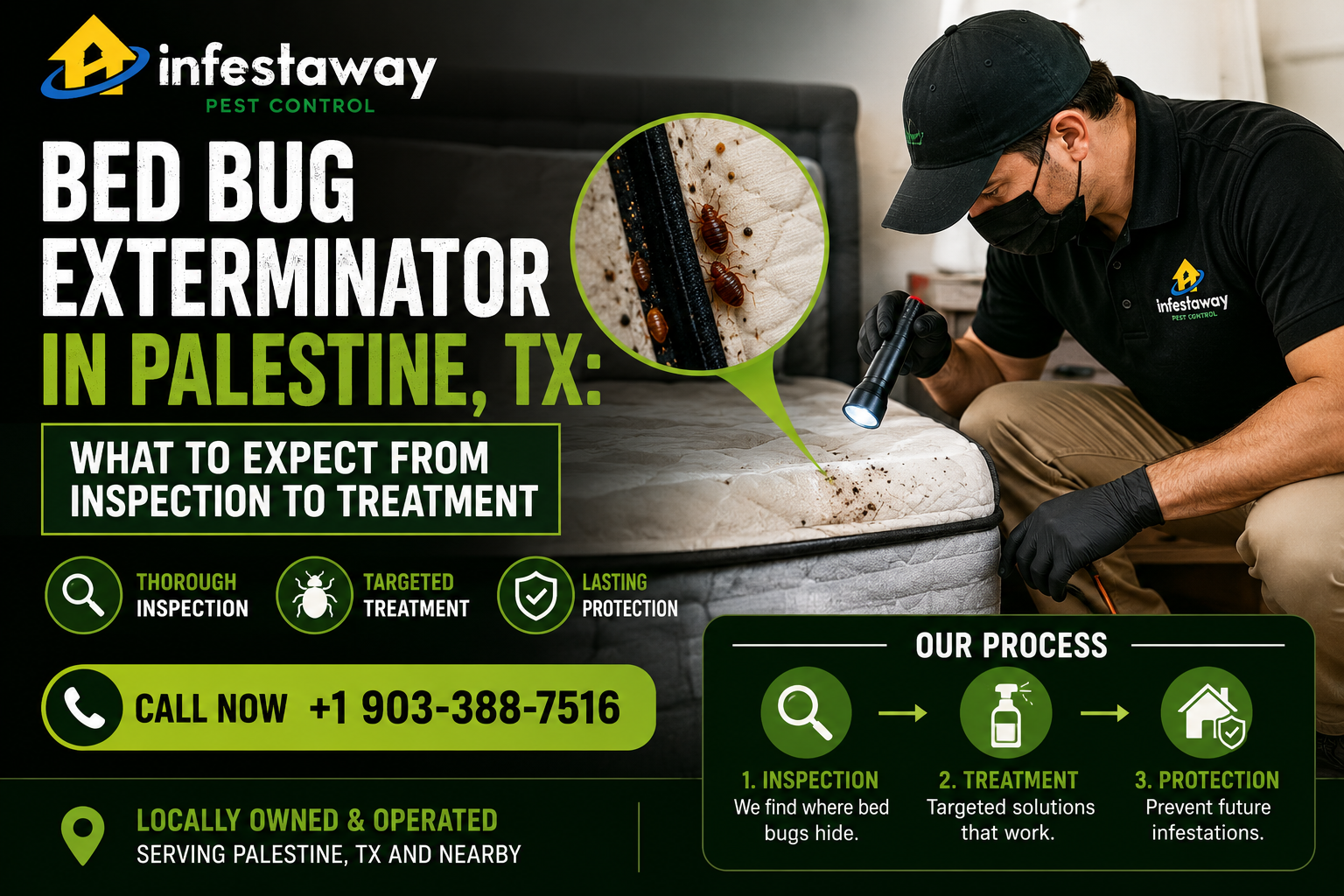
Every professional bed bug treatment starts with an inspection. Here’s what that visit looks like:
- Interview — Your technician asks where you’ve noticed bites, when symptoms started, and whether you’ve traveled, bought used furniture, or had overnight guests recently. This narrows down likely entry points.
- Visual inspection — The technician checks mattress seams, box springs, bed frames, headboards, baseboards, electrical outlets, and upholstered furniture for live bugs, shed skins, eggs, and the small dark fecal spots bed bugs leave behind.
- Adjacent rooms — Bed bugs spread to nearby rooms and shared walls, so the inspection isn’t limited to the bedroom where symptoms first appeared.
- Severity assessment — Based on what’s found, the technician classifies the infestation as light, moderate, or heavy. This determines which treatment method (or combination) makes sense.
- Treatment plan and quote — You’ll get a written plan explaining the recommended method, number of visits, prep instructions, and cost before any treatment begins.
Most inspections take 20–45 minutes depending on the size of the home.
What to Expect During Bed Bug Treatment
Once you approve the plan, treatment usually follows this sequence:
Step 1: Prep
You’ll be given a checklist — typically washing and heat-drying bedding and clothing, decluttering the room, and vacuuming. Good prep significantly improves treatment success, so don’t skip it.
Step 2: Treatment Application
Depending on severity and your preference, your technician will use one or both of these methods.
| Heat Treatment | Chemical Treatment | |
| How it works | Raises room air temperature to 135–145°F so every hiding spot reaches a lethal core temperature, no matter how deep bugs are hidden | EPA-approved residual insecticides applied to cracks, crevices, baseboards, and other harborage points |
| Speed | Often resolves a light-to-moderate infestation in a single visit (a few hours) | Usually needs a follow-up visit 10–14 days later to catch newly hatched eggs |
| Best for | Heavy infestations, items that can’t be easily moved or bagged | Lighter infestations, ongoing residual protection against re-infestation |
| Chemical exposure | None — heat only | Low-toxicity, EPA-registered products applied to targeted areas only |
| Typical visits | 1, occasionally 2 | 2–3 |
Many infestations respond best to a combined approach: heat for an immediate knockdown, plus a chemical residual barrier to prevent re-infestation.
Step 3: Follow-Up Visit
Around two weeks after the initial treatment, your exterminator returns to check interceptor traps and inspect previous hot spots for any remaining activity. If signs of bed bugs are still present, a touch-up treatment is applied at no extra charge under most service plans.
Step 4: Confirmation
Once no new activity is found for a set monitoring period, your technician confirms the infestation is resolved and gives you prevention tips to keep bed bugs from coming back.
How Long Does Bed Bug Treatment Take?
A single heat treatment can eliminate a light-to-moderate infestation in one visit, but most professional plans build in a follow-up around the two-week mark to catch eggs that survived the first round. Full resolution — from first inspection to confirmed clearance — generally takes 2 to 4 weeks.
How Much Does a Bed Bug Exterminator Cost in Palestine, TX?
Cost depends on the size of the infested area, severity, and method used. Chemical treatments are generally less expensive per visit but may require more follow-ups; heat treatments cost more upfront but often resolve the problem faster. InfestAway provides a free inspection and a written quote before any work begins, so you know the full cost up front — no surprise charges.
Signs You Need to Call a Bed Bug Exterminator in Palesatine and nearby!
- Small, itchy welts in a line or cluster, often on arms, legs, or torso
- Tiny rust-colored spots on sheets or mattress seams (fecal stains)
- Pale yellow shed skins near the mattress or bed frame
- A musty, sweet odor in a heavily infested room
- Live bugs about the size and shape of an apple seed
If you notice two or more of these signs, it’s time to schedule an inspection rather than wait for the problem to spread to other rooms.
Why Choose a Local, Licensed Bed Bug Exterminator in Palesatine and nearby!
Any pest control company can spray for bed bugs, but a locally based, licensed operator brings two advantages a national call-center brand often can’t: faster response times in Palestine and the surrounding towns, and first-hand familiarity with how East Texas housing stock (older wood-frame homes, mobile homes, multi-unit rentals) affects where bed bugs hide and how heat or chemical treatments perform in our climate. Always confirm your exterminator is licensed through the Texas Department of Agriculture’s Structural Pest Control Service before booking.
Serving Palestine, TX and the Surrounding Area
InfestAway Pest Control provides bed bug inspection and treatment for homes and businesses throughout Palestine, TX, and nearby communities including Tyler, Athens, Corsicana, Rusk, Canton, Buffalo, Elkhart, Oakwood, Montalba, and Ben Wheeler. Our licensed technicians are familiar with how East Texas’s climate and housing styles affect bed bug activity, and we tailor every treatment plan to your specific property.
Frequently Asked Questions
What does a bed bug exterminator actually do?
A bed bug exterminator inspects your property to confirm an infestation and identify hiding spots, then applies heat and/or chemical treatment to eliminate bed bugs at every life stage, followed by a check-up visit to confirm the problem is resolved.
Is professional bed bug treatment safe for kids and pets?
Yes. Licensed exterminators use EPA-approved products applied according to label instructions, and heat treatments involve no chemicals at all. Your technician will tell you exactly when it’s safe to re-enter treated rooms.
Can I just treat one room, or do bed bugs spread through the whole house?
Bed bugs can travel through wall voids, electrical outlets, and shared furniture, so adjacent rooms — especially in apartments — should always be inspected even if symptoms only appear in one bedroom.
How do I know if bed bug treatment worked?
Your exterminator will use interceptor traps and follow-up inspections over 2–4 weeks to confirm no new activity. No bites, no live bugs, and no fresh fecal spots during that monitoring period typically mean the treatment was successful.
Do I need to throw away my mattress if I have bed bugs?
Usually not. A properly treated mattress (heat or chemical, plus a certified bed bug encasement) can be saved in most cases. Replacement is typically only necessary for mattresses that are severely damaged or deeply infested.
Is heat treatment or chemical treatment better for bed bugs?
Neither is universally “better” — heat treatment usually resolves an infestation faster and uses no chemicals, while chemical treatment costs less upfront and leaves a residual barrier against re-infestation. Many professionals recommend combining both for the most reliable result.
Ready to Get Rid of Bed Bugs for Good?
DIY sprays only push bed bugs deeper into hiding. If you’re in Palestine, TX or a nearby town, InfestAway Pest Control offers a free inspection and a clear, upfront treatment plan — so you can stop guessing and start sleeping bite-free again. Call +1(903) 388-7516 to schedule your bed bug inspection today.