
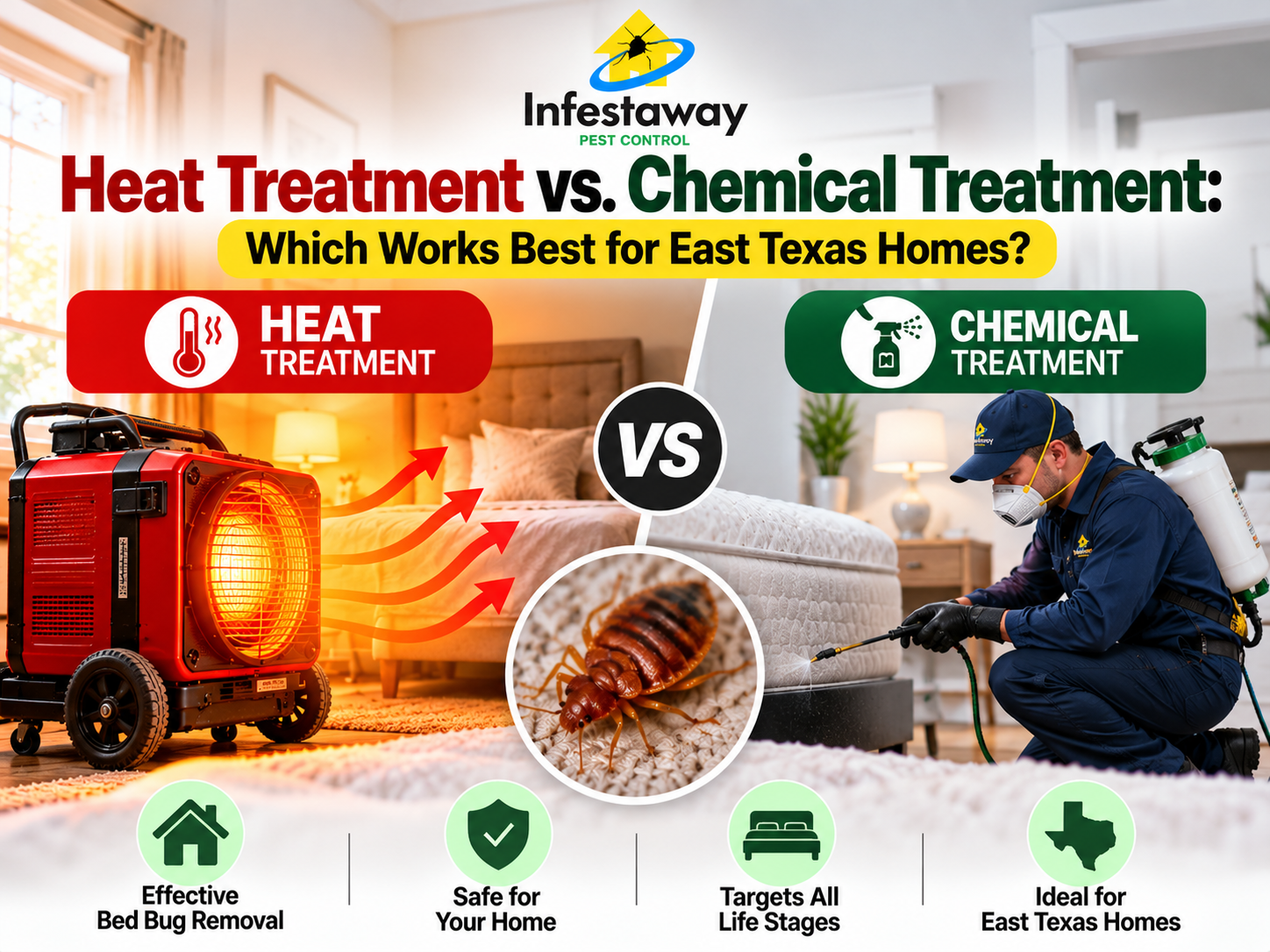
Heat treatment vs. chemical treatment for bed bugs: which works best for East Texas homes? If you are looking for a bed bug exterminator in Palestine, TX, understanding these two professional treatment approaches can help you ask better questions and avoid costly mistakes. Both methods can work when correctly selected and applied, but neither is a universal one-time cure.
Below, InfestAway Pest Control explains how each approach works, the advantages and limitations, preparation tips, and when to call a local professional.
Is Heat or Chemical Treatment Better for Bed Bugs?
Neither method is universally best. Professional heat treatment can kill exposed bed bugs and eggs when lethal temperatures reach all infested hiding places for sufficient time. Targeted chemical treatment can provide residual control in treated areas, but may require follow-up visits and careful product selection. Many successful bed bug programs combine inspection, preparation, monitoring, and more than one control method. The right choice depends on infestation size, building conditions, household needs, and a qualified exterminator’s assessment.
Why Bed Bugs Are Difficult to Eliminate
Bed bugs hide in mattress seams, box springs, bed frames, furniture joints, baseboards, and tiny cracks. Their eggs and concealed hiding places make incomplete treatment a common cause of recurring activity. Bed bugs are not a sign of poor housekeeping: they can travel in luggage, furniture, and personal belongings. In Palestine, TX, prompt identification matters more than the season because heated indoor spaces can support bed bugs year-round.
How Professional Bed Bug Heat Treatment Works
Professional heat treatment uses specialized equipment to raise the temperature of a room or structure and hold it at lethal levels long enough for heat to penetrate infested belongings and hiding places. Technicians monitor temperatures at multiple locations rather than relying on room-air temperature alone.
Potential benefits: heat can affect bed bugs at multiple life stages without depending solely on residual insecticides, and a properly designed treatment may address a large area in one service visit.
Limitations: cold spots, clutter, inaccessible voids, or improper preparation can allow survival. Heat-sensitive items may need special handling. Heat leaves no lasting residual protection, so reinfestation is possible. Never attempt whole-room heat treatment using portable heaters, ovens, or improvised equipment; it can cause fires and property damage.
How Chemical Bed Bug Treatment Works
Professional chemical control uses insecticides labeled for bed bugs and the specific application site. Depending on the infestation, a technician may use carefully targeted residual products, dusts in permitted voids, or other labeled formulations. The treatment plan should account for insecticide resistance, occupant safety, and follow-up inspection.
Potential benefits: some products remain active in treated locations for a period, allowing contact with bed bugs emerging from hiding places. Targeted treatments may be practical for localized infestations.
Limitations: eggs or bugs hidden beyond treated areas may survive; repeat visits are common. Some bed bug populations resist certain insecticides. Residents must follow all re-entry and preparation instructions. Do not spray bedding, mattresses, electrical outlets, or other surfaces unless the specific product label expressly permits that use.
Heat Treatment vs. Chemical Treatment: Side-by-Side Comparison
| Factor | Professional Heat | Professional Chemical |
|---|---|---|
| Primary approach | Controlled high temperatures | Targeted labeled insecticides |
| Eggs | Can kill eggs where lethal heat reaches them | Effect varies by product; follow-up may be needed |
| Residual effect | None after cooling | Some products provide residual activity |
| Preparation | Remove or protect heat-sensitive items as directed | Provide access and follow product-specific instructions |
| Follow-up | Inspection and monitoring remain important | Often includes repeat visits |
| Best fit | Depends on building, access, and equipment | Depends on infestation and product suitability |
Neither option guarantees one-visit elimination. A professional may recommend a combination of methods.
Which Treatment Makes Sense for East Texas Homes?
For a single-family home in Palestine, a technician should inspect bedrooms, adjacent rooms, upholstered furniture, and other likely harborage areas before selecting a treatment. Heat can be useful when broad access and temperature control are feasible. Chemical treatment can be useful when targeted residual coverage and follow-up are appropriate. Apartments and multi-unit properties may require coordination with property management because bed bugs can move between units.
East Texas humidity does not by itself determine which bed bug treatment works best. Infestation extent, clutter, construction, occupant needs, and treatment execution are more important.
What to Do Before a Bed Bug Exterminator Arrives
- Document where and when you saw bugs, bites, dark spotting, or shed skins.
- Avoid moving infested belongings into clean rooms.
- Follow the company’s preparation checklist; instructions differ for heat and chemical methods.
- Bag and launder suitable fabrics using a hot dryer cycle when fabric care permits.
- Do not use foggers or apply extra pesticides before the appointment unless instructed by the professional.
- Tell the technician about pets, aquariums, medical equipment, and heat-sensitive possessions.
Skin reactions alone cannot confirm a bed bug infestation; an inspection and identification are important.
How Long Does Bed Bug Treatment Take?
Heat services can involve several hours of setup, treatment, and cooling, with timing varying by property and scope. Chemical programs may involve an initial visit plus scheduled follow-up inspections or treatments over subsequent weeks. The exact timeline depends on infestation severity, preparation, and treatment design. Monitoring after service is essential regardless of method.
Can Bed Bugs Come Back After Treatment?
Yes. Surviving bugs in untreated hiding places or new introductions through luggage and furniture can cause another infestation. Inspect travel belongings, avoid bringing in potentially infested used furniture without careful checking, use suitable mattress encasements when recommended, and follow the exterminator’s monitoring plan. Avoid claims that any single treatment prevents bed bugs forever.
Why Hire a Bed Bug Exterminator in Palestine, TX?
A qualified bed bug exterminator in Palestine, TX can confirm the pest, determine how far it has spread, discuss heat and chemical options, and develop a treatment and follow-up plan. Ask about the methods actually offered, preparation requirements, safety instructions, repeat visits, and any written service terms. Do not assume every pest control company provides structural heat treatment.
Professional Bed Bug Control From InfestAway Pest Control
InfestAway Pest Control serves Palestine, TX and surrounding East Texas communities with professional bed bug treatment services. If you have found bed bugs or suspect an infestation, contact the team to discuss an inspection and the treatment options available for your property. Specific heat-treatment availability should be confirmed directly rather than assumed.
New customers can ask about the advertised 12% discount on their first service.
Call or text (903) 388-7516 to discuss bed bug control in Palestine, TX. For additional guidance, read what to expect from a bed bug exterminator in Palestine or explore local pest control services.
Frequently Asked Questions: Bed Bug Heat vs. Chemical Treatment
Select a question to expand the answer.
Is heat treatment better than chemical treatment for bed bugs?
Heat may eliminate bed bugs and eggs in areas that reach lethal temperatures, while some chemical products provide residual activity. The best approach depends on the infestation and property; integrated treatment may be appropriate.
Can heat treatment kill bed bug eggs?
Yes, when the eggs themselves reach lethal temperatures for sufficient time. Cold spots and poor heat penetration can allow survival.
Does chemical bed bug treatment kill eggs?
It depends on the product and how it is used. Eggs may survive some treatments, which is one reason monitoring and follow-up are important.
How many bed bug treatments are needed?
There is no universal number. Chemical programs often require repeat visits, while heat treatment still requires verification and may need additional action if bugs survive.
Can I stay home during bed bug treatment?
Occupancy and re-entry instructions depend on the treatment method and products. Follow the licensed technician’s directions and any pesticide label requirements.
How much does a bed bug exterminator cost in Palestine, TX?
Pricing varies with property size, infestation severity, method, and follow-up needs. Contact InfestAway Pest Control for an assessment and estimate.
Does InfestAway offer bed bug heat treatment?
InfestAway advertises bed bug treatment services. Contact the company to confirm whether professional heat treatment is currently offered and appropriate for your home.
Can bed bugs return after professional treatment?
Yes. Untreated hiding places or newly introduced bed bugs can cause further activity. Monitoring and prevention remain important.
Who should I call for bed bug treatment in Palestine, TX?
InfestAway Pest Control serves Palestine and surrounding East Texas communities. Call or text (903) 388-7516 to discuss an inspection and available treatment options.
Trusted Bed Bug Information
For independent guidance, see the US Environmental Protection Agency’s bed bug resources. Follow all pesticide labels and professional preparation instructions.